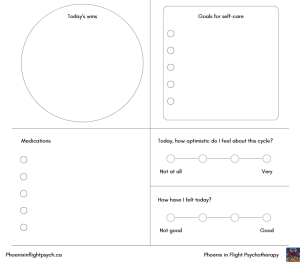
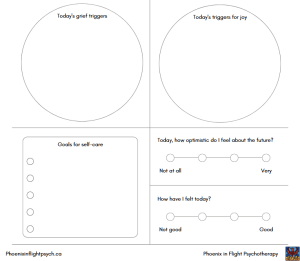
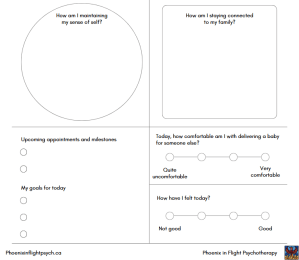
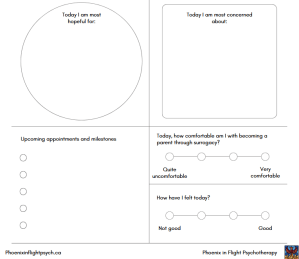
Daily Check-in Journal Pages
In the thick of our journeys, it can be very easy to go on auto-pilot. “How are you doing?” is answered with “I’m fine” regardless of how fine we really are. Checking-in with ourselves can be extremely helpful in figuring out how we are actually doing. By consistently checking in, you might find that you are doing better than you thought you were. You may also find that when you are being honest with yourself, you might actually benefit from some help.
These records could also become a keepsake to reflect on in the future when you are at peace or making peace with the end of your journey to grow your family.
I welcome you to download the sheet or sheets that best fit with where you are in your journey. If through self-reflection you find that you could benefit from infertility counselling, I invite you to reach out. I am Annie, a Registered Psychotherapist (Qualifying) with the College of Registered Psychotherapists of Ontario.
Practicing Psychological Flexibility in Infertility workbook
It is a set of skills that help us strengthen our ability to handle our thoughts and feelings without getting stuck in them while still doing what matters to us.
With psychological flexibility, we are able to:
- Be open to our inner experiences (like anxiety, sadness, or doubt) without trying to fight or avoid them.
- Stay present in the here-and-now instead of getting lost in worries about the future or regrets about the past.
- Choose actions that line up with our values, even when life gets hard.
For example, imagine you’re nervous about upcoming fertility treatments or testing. Psychological flexibility means you don’t have to get rid of the nervousness, you just notice it, accept it’s there, and move forward with the treatment or tests because they are important to you. Psychological flexibility puts you in the driver’s seat with your thoughts and emotions as passengers.
This workbook provides information and reflection activities to help you to build and strengthen your psychological flexibility as you navigate your infertility journey.

Communication and Relationship Strengthening Sheets
Rarely do we face infertility alone. Our partners, friends, family, fertility team and more can end up in the thick of it with us. We all have different thoughts, opinions, goals, histories, and when these brush up against someone else’s, conflict can follow. The following information sheets provide guidelines and tips to help make sure everyone feels seen, heard, and understood in conflict.
 Phoenix in Flight Psychotherapy
You must be logged in to post a comment.